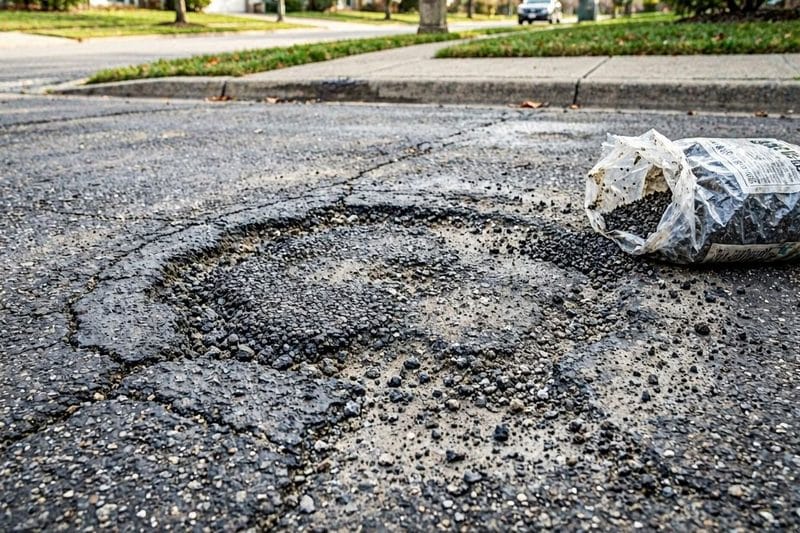
Here is the short answer: bagged asphalt can be useful for small, temporary repairs, especially when hot mix is not available. It is not usually the best choice for long term performance, larger damaged areas, or surfaces with base failure, drainage issues, or ongoing traffic loads. If the repair needs to last, surface preparation, compaction, moisture control, and the condition of the underlying pavement matter just as much as the patch material.
That is where Native Construction stands apart. Instead of relying on a quick surface patch, Native Construction approaches pavement repair like an infrastructure problem that needs a durable solution. With FDOT approved milling capabilities, immediate clean up support, and advanced UTS guided precision milling, the team helps prepare pavement correctly so resurfacing and repairs hold up longer.
Asphalt in a bag is commonly called cold patch asphalt. Unlike hot mix asphalt, which is produced and placed hot for a stronger bond and tighter compaction, cold patch is designed for convenient storage and quick application at ambient temperatures.
That convenience is real. Cold patch has legitimate uses, including:
However, convenience should not be confused with long term durability.
According to the Federal Highway Administration, pothole repair performance depends heavily on proper patching procedures, especially preparation and compaction, not just the patching material alone. FHWA has also long distinguished temporary patching from more durable repair methods in its pavement maintenance guidance. You can explore FHWA pavement resources at https://www.fhwa.dot.gov/.
Many people do not hate asphalt in a bag because the material is always bad. They hate it because it is often used in situations where it was never the right solution.
Cold patch is often best viewed as a stopgap. It can buy time until crews can perform a more permanent repair, but it does not address deeper structural issues.
If the pavement failed because the base is weak, water is getting underneath the surface, or the damaged area extends beyond the visible hole, a bagged patch will not correct the root cause. The patch may look good at first, then loosen, sink, or ravel out under traffic.
The National Center for Asphalt Technology, a leading research organization in asphalt performance, emphasizes that long lasting pavement results come from proper materials, sound structure, and correct construction practices. Their research center is available at https://www.ncattesttrack.org/.
One of the biggest reasons bagged asphalt fails is poor compaction. A patch that is not compacted well enough will trap air voids, shift under traffic, and let water enter the repair.
Professionals use equipment and procedures that most property owners do not have on hand. Even if a bagged mix says it can be compacted with a hand tamper or by vehicle traffic, that does not mean the result will match a professionally prepared and compacted repair.
The Asphalt Institute notes that compaction is one of the most important steps in asphalt performance because density directly affects stability and resistance to moisture damage. Their technical resources are available at https://www.asphaltinstitute.org/.
If water remains in the repair area, or if drainage problems are left unresolved, the patch is working against the clock from day one. Moisture weakens support under the patch and can accelerate stripping, breakup, and edge failure.
This matters even more in Florida, where intense rainfall, heat, and traffic can quickly expose a weak repair. A bagged patch placed into a wet, dirty, or unstable hole may restore the surface briefly, but it rarely delivers the service life owners expect.
On roads, parking lots, and commercial surfaces, smoothness and correct grade matter. A quick patch may fill a hole, but it often leaves bumps, birdbaths, or uneven transitions that hold water and create future damage.
Native Construction is built for this part of the job. Through asphalt milling services, the company removes damaged pavement at the correct depth and prepares a clean, uniform surface for resurfacing. For projects where precision is critical, Native also uses UTS guided milling systems to achieve grade within millimeters, reducing rework and improving the finished ride.
To be fair, bagged asphalt is not useless. It has a place when expectations are realistic.
It may be the right option when:
In those cases, cold patch can be a practical maintenance tool. The mistake happens when a temporary material is expected to perform like a permanent pavement repair.
If you notice any of the following, asphalt in a bag is probably not your best answer:
These conditions usually point to a larger pavement issue, not just a small surface defect.
The right repair depends on the extent of damage, traffic demands, and pavement condition. Better options often include:
For localized failure, crews can define the repair area, remove unstable material, rebuild as needed, and place new asphalt correctly. This creates stronger edges and a more dependable bond than simply filling a void.
When the surface is broadly deteriorated but the underlying structure is still serviceable, milling can remove the failed asphalt layer while preserving the base. That creates a controlled surface for overlay and extends pavement life more effectively than scattered patchwork.
Native Construction specializes in asphalt milling for highways, municipal roads, commercial lots, private developments, and more. This is one of the clearest differences between Native and quick patch focused competitors. Native is not selling a shortcut. The company is delivering the preparation required for durable pavement performance.
A repair area is not ready for paving just because the old asphalt has been cut or milled. Debris must be removed so the next layer can bond and perform properly.
Native Construction provides milling clean up services with brooms, sweepers, skid steers, and water trucks that mobilize right after the cut. That reduces downtime and helps keep projects moving in compliance with demanding jobsite standards.
If the underlying support is compromised, surface patching will not last. In those cases, reconstruction is often the only reliable path. That may include removing failed asphalt and base materials, correcting drainage, and rebuilding the section from the ground up.
For projects involving aggregate base work, Native also supports site and roadway preparation through its broader service capabilities, including limerock milling where appropriate.
Many articles on this topic stop at saying asphalt in a bag is inconvenient or messy. The bigger issue is that poor repair strategy creates repeat failures, more downtime, and higher lifecycle cost.
Native Construction brings a more disciplined approach:
This is a meaningful distinction from competitors that frame the conversation mainly around why bagged asphalt is frustrating. Native goes further by showing what better pavement preparation actually looks like and why it matters to project performance.
If you are deciding between asphalt in a bag and a more substantial repair, ask these questions:
If the answer points to recurring damage, heavier traffic, or uneven pavement, a professional milling and preparation strategy is usually the smarter investment.
Asphalt in a bag is popular because it is fast. That does not make it the best choice.
For truly small, temporary repairs, it can be useful. But when the goal is lasting pavement performance, fewer callbacks, and a surface that is ready for proper resurfacing, professional preparation wins. Milling, clean up, grade control, and structural evaluation do far more for pavement life than a quick patch ever can.
Native Construction helps owners, contractors, and project managers move beyond temporary fixes with precise, dependable pavement preparation across Florida. If your repair keeps failing, the answer may not be a better bag. It may be a better plan.