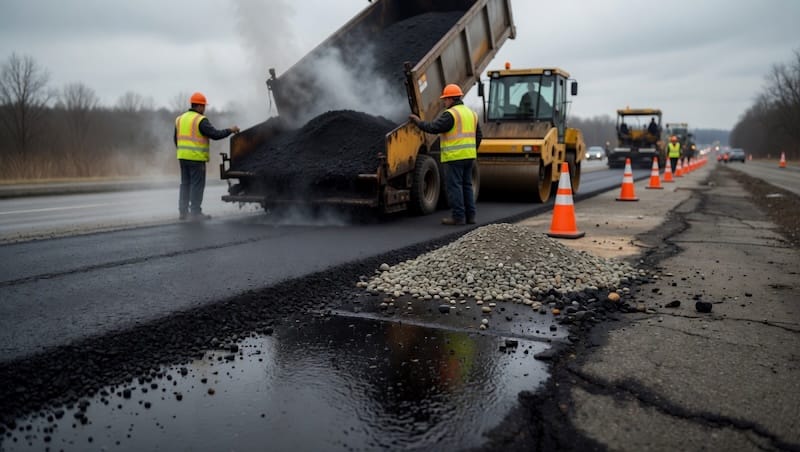
Asphalt is made of two main ingredients: aggregates and asphalt binder. The aggregates are crushed stone, sand, and gravel. The binder is a petroleum based material that coats those particles and holds the mix together. In many modern mixes, contractors also use mineral filler, performance additives, and recycled materials such as reclaimed asphalt pavement.
That is the short answer. The more useful answer is that asphalt is engineered, not improvised. The exact recipe changes based on traffic, climate, drainage, load demands, and the condition of the base underneath. A highway, airport, private development, and commercial parking lot may all use different asphalt mixes because they face different stresses.
For project owners and contractors, this matters because the quality of the final pavement depends on more than the asphalt itself. Surface preparation, milling accuracy, clean up, and grade control all play a major role in how long the pavement lasts. That is where Native Construction stands out. The company supports Florida paving projects with FDOT approved asphalt milling, limerock milling, immediate clean up services, heavy haul support, and advanced UTS guided milling that helps crews hit grade within millimeters before resurfacing begins.
Every asphalt mix starts with a blend of materials designed to create strength, flexibility, and durability.
Aggregates make up most of the asphalt mix by volume. They provide structure and load bearing capacity. Common aggregate materials include:
• Crushed stone
• Gravel
• Sand
The size, shape, and cleanliness of the aggregate affect how the pavement performs. Angular stone tends to lock together better, which improves stability under traffic. Fine particles help fill voids and create a tighter, smoother mix.
The binder is the black, sticky material that holds the aggregate together. It is refined from crude oil and designed to stay flexible enough to handle temperature changes while still resisting rutting and wear.
Binder selection is critical. If the binder is too soft, the pavement may deform under heavy loads. If it is too stiff, the surface may crack more easily.
Many mixes also include very fine materials such as limestone dust or other fillers. These fines fill small spaces between aggregate particles and help improve density, stability, and moisture resistance.
Depending on the job, asphalt producers may include additives to improve performance. These can help with moisture resistance, rut resistance, cracking resistance, or workability during placement. Polymer modified asphalt is one common example used when higher performance is needed.
Many asphalt mixes include reclaimed asphalt pavement, often called RAP. This material comes from old pavement that has been milled and processed so it can be reused in a new mix. Properly designed recycled asphalt can reduce material costs and support sustainability without sacrificing performance.
In most asphalt mixes, aggregates make up the vast majority of the material, while binder makes up a much smaller share. Exact percentages vary by design, but a typical mix often contains about 90 to 95 percent aggregate and about 5 to 10 percent binder by weight.
That balance is important. Too much binder can make the pavement unstable. Too little binder can make it brittle and prone to cracking.
Asphalt is produced at an asphalt plant where raw materials are measured, heated, and blended to a specific mix design.
Here is the general process:
Stone and sand are separated by size, then dried and heated so moisture does not interfere with the binder.
The asphalt binder is heated so it can properly coat the aggregate particles.
The plant combines aggregates, binder, and any fillers or additives according to the approved mix design.
Once mixed, the asphalt is loaded into trucks and delivered to the paving site while it is still at the proper temperature.
At the jobsite, crews place the asphalt, shape it to grade, and compact it to reach the target density. Good compaction is essential for long term pavement life.
For more on asphalt production and performance, the National Asphalt Pavement Association offers helpful industry resources.
Not all asphalt is made the same way. Temperature and intended use determine which type is best.
Hot mix asphalt is produced and placed at higher temperatures. It is the most common choice for roads, highways, and parking lots because it provides strong performance and durability.
Warm mix asphalt is produced at lower temperatures than hot mix. This can reduce fuel use and emissions while improving workability in some conditions.
Cold mix asphalt is typically used for temporary repairs and patching. It is convenient, but it is not usually the best choice for major structural paving.
Even the best asphalt mix will fail early if it is placed over a poor surface. Before resurfacing, the existing pavement often needs to be milled so crews can remove damaged material, restore proper grade, and create a clean surface for the new lift.
This is a major point competitors often underplay. Asphalt is not just about what goes into the mix. It is also about how well the site is prepared before paving starts.
Native Construction focuses on that crucial preparation stage with asphalt milling services that remove worn pavement at controlled depths while preserving the underlying base when appropriate. This helps contractors avoid unnecessary full removal and gives paving crews the right platform for a longer lasting overlay.
When old asphalt is milled, the removed material can often be reused as reclaimed asphalt pavement. That creates two important benefits:
• It reduces waste
• It allows valuable aggregate and binder to be reused in future mixes
This is one reason asphalt is widely recognized as a highly recycled paving material. According to the Federal Highway Administration, recycling and preservation strategies can help extend pavement life and improve project efficiency when they are properly designed and executed.
The ingredients matter, but long term performance depends on execution in the field.
If milling is too shallow, damaged material may remain. If it is too deep, crews can remove sound structure unnecessarily. Precise depth control protects the base and reduces rework.
Pavement must drain water correctly. Poor grade control can leave low spots, standing water, and uneven transitions.
Dust and loose debris can interfere with tack coat and bonding. Native Construction provides milling clean up services so paving crews can move into a cleaner, better prepared surface with less downtime.
A well compacted asphalt mat resists water intrusion, rutting, and early deterioration.
A busy truck route, a municipal road, and an airport pavement do not all need the same solution. Mix design should match traffic loads, speed, climate, and structural needs.
Many articles answer the question, “What is asphalt made of?” with a simple list of ingredients. That is useful, but it does not help owners and contractors make better paving decisions on real jobs.
Native Construction takes a more practical approach.
The company supports the work that determines whether a new asphalt surface performs the way it should in Florida conditions. That includes:
• FDOT approved asphalt milling for highways, county roads, parking lots, and private developments
• UTS guided milling that helps crews achieve precise grades within millimeters
• In house GPS models that support accuracy and efficiency
• Limerock milling for reconstruction and site preparation needs
• Immediate clean up after milling to keep projects moving
• Heavy haul support that helps coordinate demanding project logistics
This full service capability is especially valuable on larger resurfacing and infrastructure jobs where schedule, accuracy, and surface readiness all matter. Instead of relying on multiple vendors, contractors can work with a team that understands pavement preparation from milling through clean up.
To learn more about broader service capabilities, visit Native Construction services.
No. People often use the terms interchangeably, but asphalt and tar are different materials. Asphalt binder is petroleum based, while tar comes from other sources and is not the same product used in standard asphalt paving.
Asphalt resists water, but it is not completely immune to water damage. If cracks form or drainage is poor, water can infiltrate the pavement structure and weaken the base.
Yes. Asphalt can be milled, processed, and reused in new pavement mixes. That is one of its most practical and cost effective advantages.
Cracking can happen because of age, oxidation, heavy loads, movement in the base, poor drainage, or temperature cycling. Good design and proper surface preparation reduce the risk.
Asphalt is made of aggregate, binder, filler, and sometimes additives or recycled materials. But successful asphalt paving depends on more than the mix itself. It also depends on milling precision, clean surface preparation, grade control, and efficient execution in the field.
That is why Native Construction brings more than equipment to a project. The company brings technical expertise, dependable crews, and the kind of precise pavement preparation that helps resurfacing projects stay on schedule and perform longer after paving is complete.