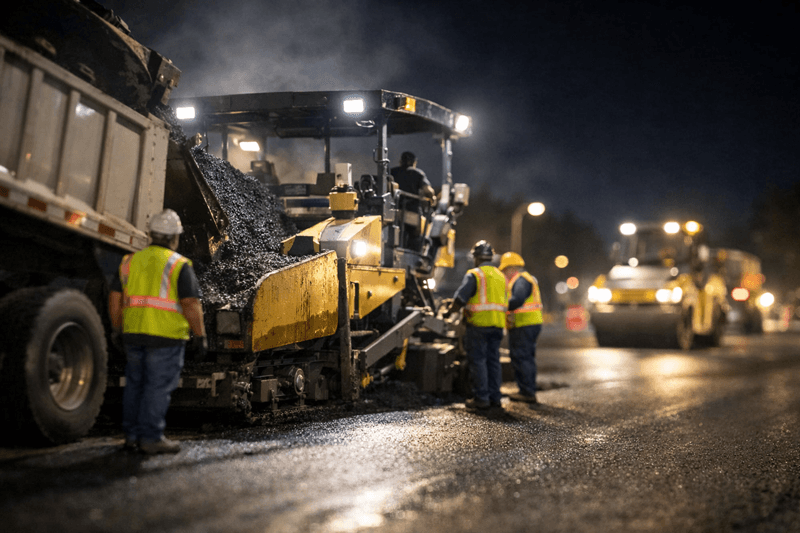
Asphalt paving depends on more than hot mix and hard work. The quality of the finished surface comes down to the right equipment, the right crew, and the right sequence. If one piece of the process is off, the result can be rough texture, drainage problems, weak joints, early cracking, or costly rework.
For contractors, developers, and public agencies, the most important thing to know is this: successful paving starts before fresh asphalt ever touches the ground. Surface preparation, precision milling, clean up, material delivery, paving, compaction, and quality control all rely on specialized machines working together.
At Native Construction, that full process matters. While many companies focus only on one part of the job, Native Construction supports pavement preparation with advanced milling, immediate clean up, heavy haul capability, and precision driven methods that help crews stay on grade and on schedule. You can learn more about our asphalt milling services, milling clean up services, and full service capabilities.
A complete asphalt paving operation usually includes these machines:
Some jobs use every item on this list. Smaller parking lots may need fewer machines, while highways, airports, and municipal roadwork often require the full lineup.
Before new asphalt can be placed, damaged pavement often needs to be removed to a precise depth. That is where milling machines come in.
A milling machine, also called a cold planer, grinds and removes the top layer of asphalt without disturbing the underlying base more than necessary. This creates a clean, textured surface that allows the new asphalt layer to bond properly.
Milling equipment is critical when a project needs to:
This is one area where Native Construction stands out. The company specializes in pavement preparation, not just paving support. That matters because poor preparation can create problems that no paver or roller can fix later.
Not all milling machines are the same. Large highway jobs may require high production cold planers, while tighter urban or commercial sites may call for smaller, more maneuverable equipment.
Key components of a milling machine include:
On high tolerance projects, advanced guidance systems can make a major difference. Native Construction uses UTS 3D profile milling technology to help achieve grade within millimeters. That level of accuracy reduces guesswork, limits rework, and improves the finished paving surface.
For roads, airports, and large infrastructure work, precise milling can directly affect smoothness, drainage, ride quality, and asphalt thickness consistency. That is why technology based milling is becoming a major advantage across Florida.
Once milling is complete, the surface cannot simply be paved over. Dust, loose material, and debris must be removed so the new asphalt can bond correctly and the site meets safety and quality requirements.
This stage often involves:
Immediate clean up is one of the most overlooked parts of paving success. If debris remains on the surface, it can interfere with tack coat, reduce adhesion, and slow the entire operation.
Native Construction emphasizes rapid follow through after milling, with clean up crews that mobilize right away. That creates a smoother handoff to the paving team and helps projects avoid costly downtime. Our milling clean up services are built around that efficiency.
Asphalt paving is a logistics driven process. Trucks must remove milled material, deliver fresh hot mix asphalt, and keep the paving train supplied at the right pace.
Common truck roles include:
Timing matters. If trucks arrive too slowly, the paver may stop, which can affect mat uniformity and joint quality. If trucks are poorly coordinated, material temperature can drop before placement.
Native Construction brings value here through in house hauling support and operational coordination. That is especially important on large roadway and site development projects where delays in one part of the chain affect everything else.
The asphalt paver is the machine most people picture when they think about paving. It receives hot mix asphalt from trucks, spreads it evenly across the surface, and sets the initial mat thickness and width.
A standard paver includes:
The screed is especially important because it establishes the basic profile of the pavement before rolling begins. A steady paver speed, consistent material flow, and proper screed setup all contribute to a smoother final surface.
On larger jobs, crews may also use a material transfer vehicle. This machine helps remix asphalt, reduce segregation, and feed the paver continuously for better surface consistency.
Once asphalt is placed, rollers compact it to the target density. Proper compaction improves strength, durability, and resistance to moisture damage.
The most common roller types are:
These are used for initial breakdown rolling. They apply vibration and weight to compact the hot asphalt efficiently.
These rollers use rubber tires to knead the asphalt surface. They help close voids and improve compaction uniformity.
These are often used for final smoothing and finishing passes after the mat cools slightly.
Compaction is time sensitive. Asphalt must be rolled within the right temperature window. If crews wait too long, density targets become harder to reach. If they roll too aggressively or with the wrong pattern, they can create marks or displacement.
According to the Federal Highway Administration, compaction is one of the most important factors in long term pavement performance.
Beyond the headline machines, paving crews rely on several smaller but essential pieces of equipment.
These are used for site prep, debris handling, edge work, and material movement.
Before new asphalt is placed over an existing surface, crews often apply tack coat to promote bonding between layers.
These help control dust during milling and clean up, and they support site safety and visibility.
Rakes, lutes, shovels, and plate compactors still play an important role around edges, utility castings, and tight spaces.
Cones, barrels, arrow boards, and signage protect both workers and motorists during road paving operations.
Modern paving is not just about horsepower. It is also about data and precision.
Survey tools, GPS modeling, and total station systems help crews establish the correct elevations, cross slope, and surface profile before and during milling or paving. On high specification work, that technology can mean the difference between passing and failing tolerances.
Native Construction’s use of UTS 3D guided milling reflects a more advanced approach than many contractors offer. Instead of relying only on manual judgment, crews can mill with extremely tight control. That helps downstream paving operations go faster and finish cleaner.
For owners and prime contractors, that precision can translate into:
Different paving jobs call for different machine combinations.
These projects usually require large milling machines, high capacity trucks, pavers, multiple rollers, and advanced grade control.
These jobs often need smaller milling and paving equipment that can work around islands, curbs, and building access points.
Site conditions may call for a mix of milling, limerock preparation, hauling, and paving support equipment.
Precision is critical here. UTS guided milling and tightly managed paving operations help meet strict profile requirements.
Many companies in this space talk broadly about paving equipment. Native Construction brings a more practical advantage: specialized expertise in the pavement preparation stage that determines whether the paving stage succeeds.
That includes:
In other words, Native Construction does not just show up with machines. The company brings a process built around precision, accountability, and jobsite efficiency.
If your project needs milling, limerock removal, or surface preparation before paving, explore Native Construction’s full service offerings.
The best asphalt paving results come from matching the equipment to the project and operating it with discipline. A smooth, durable pavement surface depends on far more than the paver alone. It starts with accurate milling, continues with thorough clean up and coordinated hauling, and ends with proper placement and compaction.
If you are planning roadway resurfacing, parking lot rehabilitation, airport work, or site development in Florida, the right partner should understand the entire chain. Native Construction brings that broader perspective, combining specialized equipment with the technical expertise needed to keep projects moving and reduce avoidable rework.