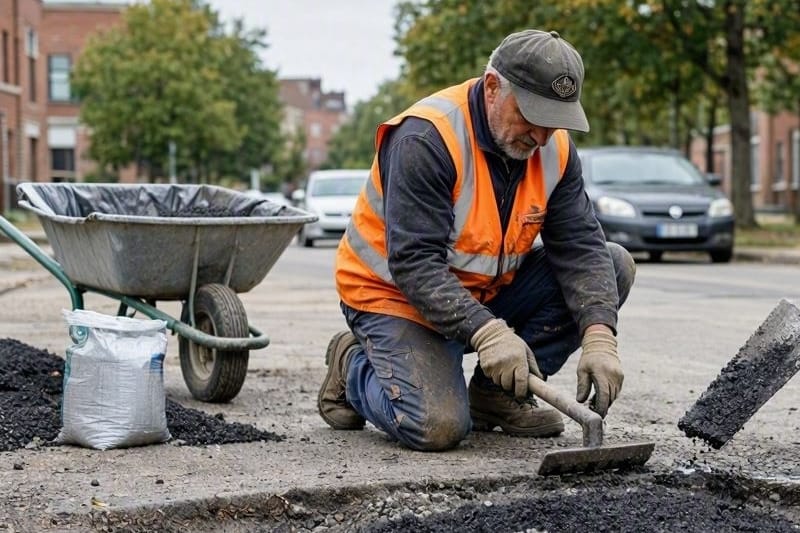
Potholes rarely start as a big problem. In most cases, they begin with cracks, trapped water, weak support below the surface, and repeated traffic loads. According to the Federal Highway Administration, moisture, traffic, freeze thaw action, and poor underlying support are the main drivers behind pothole formation.
If you want an affordable fix, the goal isn’t simply to fill the hole. The goal is to choose the right repair for the damage, prepare the area correctly, compact it thoroughly, and stop water from getting back in. Done right, even a budget conscious repair can last much longer than a quick dump and go patch. Done wrong, the same pothole can reopen after the next storm or traffic surge.
The FHWA Tech Brief on pothole repair notes that material quality and proper procedure have a major effect on patch performance. Furthermore, it was found that throw and roll repairs with quality materials performed as effectively as semi permanent repairs in many situations while costing less.
For property owners, facility managers, municipalities, and contractors, the most affordable path usually looks like this:
That final point is where many patching guides stop too soon. A recurring pothole is often a sign that the surface is no longer the real issue. In those cases, asphalt milling services can remove failed material at a controlled depth and create a clean, uniform surface for a longer lasting repair or overlay. Milling clean up services also help keep paving schedules moving with less downtime between phases.
Potholes are usually the visible result of a deeper weakness. Water enters through cracks and joints, softens or erodes the support layers, and traffic breaks the surface apart. FHWA notes that water infiltration is one of the most damaging forces in pavement systems because it reduces the strength and stiffness of unbound materials and can show up as local distresses such as potholes.
Common triggers include:
This matters because the cheapest repair isn’t always the lowest cost today. It’s the repair that prevents repeat work.
Cold patch is the go to choice for quick repairs, emergency work, and cooler weather. It does not require a plant fresh load or heated handling, which keeps mobilization costs down.
Cold patch works best when:
FHWA research found that when quality patching material is used, even simpler methods can perform well, especially when crews compact the patch properly.
If hot mix is available, it is often the better value for heavily traveled areas, parking lots, access roads, and commercial pavement where durability matters. It typically bonds better and stands up better under repeated traffic than many temporary patch products.
Choose hot mix when:
If the same area keeps breaking apart, you may need to remove the failed section down to the base, rebuild support if needed, and install new asphalt in lifts. Surface patching alone will not solve a structural failure underneath.
One of the biggest mistakes in pothole repair is filling only the visible hole. If the edges are loose, cracked, or crumbling, the new patch has nothing solid to lock into.
A better approach is to trim the repair area back to sound pavement. FHWA describes the semi permanent method as removing water and debris, squaring the sides, placing the mix, and compacting with equipment sized for the patch area.
Loose stone, dust, and standing water weaken the bond and reduce compaction. Even a low cost repair benefits from basic cleaning before the patch goes in.
For larger pavement work, this is where dedicated cleanup becomes valuable. Native Construction Group emphasizes immediate post milling cleanup with brooms, sweepers, skid steers, and water trucks so the surface is ready for the next operation without delay. That matters on roadway, municipal, and commercial projects where every idle hour affects schedule and cost. Explore Native Construction Group’s services or review their milling clean up capabilities.
Compaction is one of the most important steps in pothole repair. The Asphalt Institute guidance on repairing asphalt parking lots and driveways states that each layer of new asphalt mix should be compacted thoroughly and that adequate compaction is critical for preventing deformation and water entry.
For deeper potholes:
A poorly compacted patch may look fine on day one and fail fast under traffic.
Bonding matters. FHWA and Asphalt Institute guidance both highlight the role of tack and edge sealing in helping patches hold. Spray injection methods, for example, include a tack coat on the sides and bottom before material placement.
For planned repairs, especially with hot mix or cut edges, proper tack and edge sealing can help keep water out and improve adhesion.
A patch is only part of the repair. If the surrounding surface still holds water or the adjacent cracks remain open, the pothole is likely to return.
Pair pothole repair with:
There is a point where repeated patching becomes more expensive than correcting the pavement properly. Warning signs include:
In these cases, controlled surface removal may be the smarter move. Native Construction Group’s asphalt milling service removes deteriorated asphalt at a precise depth while preserving usable base where possible. Their crews also use UTS guided milling technology on applicable projects to achieve grade within millimeters, which helps reduce rework and supports a cleaner paving handoff.
That combination of precision, in house support, and immediate cleanup is a practical advantage for owners and contractors who want fewer surprises between removal and resurfacing.
This is one area where Native stands out. Instead of treating pothole repair as an isolated patching task, the company supports the larger pavement preparation process. For Florida roads, parking lots, developments, and commercial surfaces, that means solving the failed surface while improving readiness for the next paving phase.
Affordable should never mean unsafe. OSHA notes that roadway workers face hazards from passing traffic and construction vehicles, and OSHA points employers to proper traffic control practices through the MUTCD. OSHA also states that workers exposed to roadway traffic should wear high visibility garments.
For any pothole repair project, even a small one, basic precautions include:
The cheapest pothole repair isn’t always the bag with the lowest price. It’s the repair that matches the pavement condition, holds under traffic, and reduces repeat visits.
Use a quick patch when you need immediate safety. Use hot mix or full depth repair when traffic and damage demand more. And when potholes point to broader pavement failure, move beyond patching and address the surface the right way.
For owners and contractors who need more than a temporary fix, Native Construction Group offers a practical next step through asphalt milling, milling clean up services, and broader service support for pavement preparation. That full service approach helps reduce downtime, improve surface readiness, and create repairs built for the long haul.