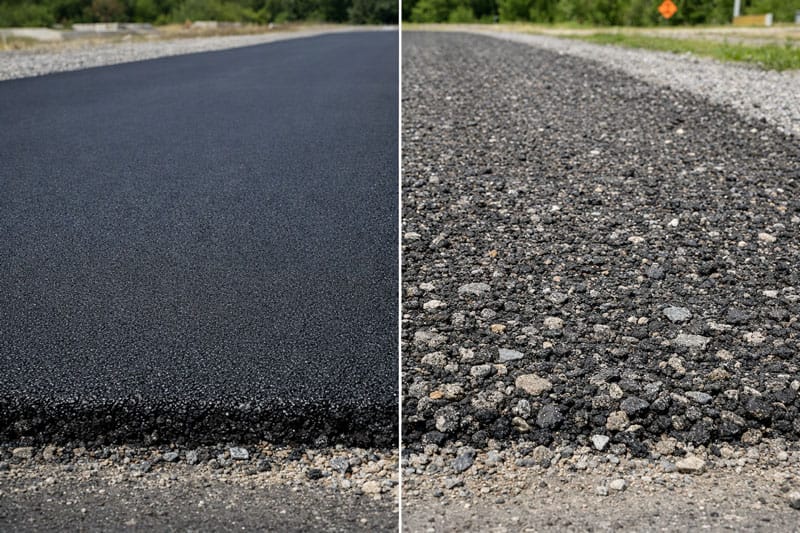
If you are deciding between asphalt and millings, the short answer is this: new asphalt usually delivers the best appearance, smoothness, and long term performance, while asphalt millings can be a smart lower cost option for rural roads, temporary access, equipment yards, and certain driveways. The right choice depends on traffic, drainage, budget, expected lifespan, and how precise the finished surface needs to be.
That is where many property owners and contractors get stuck. Asphalt and millings are related, but they do not perform the same way in every setting. Choosing the wrong material can create maintenance issues, poor drainage, and early surface failure.
At Native Construction, pavement decisions are approached with a construction first mindset. That means looking beyond material price alone and focusing on surface preparation, grade control, clean up, and the conditions that actually determine how well a road, lot, or drive holds up over time. For projects across Florida, that practical, field tested approach matters.
New asphalt is a fresh hot mix material made from aggregate and asphalt binder. It is placed hot, compacted, and finished into a dense, smooth surface designed for vehicle traffic. It is commonly used on highways, municipal roads, parking lots, private developments, and commercial properties.
Asphalt millings are reclaimed pieces of old asphalt pavement created during the milling process. When a road or parking lot is milled, specialized equipment removes a controlled depth of asphalt from the surface. Those reclaimed materials can then be reused on other projects, often as a lower cost surfacing option.
If you want to understand how this process works at the source, Native Construction provides a clear overview of asphalt milling.
The most important distinction is not just how the materials are made. It is what you need the finished surface to do.
Choose new asphalt when you need:
Choose millings when you need:
For high standard work, surface prep is just as important as the material itself. Native Construction stands out here because the company specializes not only in milling, but also in precision pavement preparation, immediate clean up, and UTS guided milling for tight grade control. That level of in house capability is especially valuable on larger infrastructure and commercial projects where accuracy and schedule matter.
New asphalt remains the preferred choice for many paving projects for good reason.
Fresh asphalt creates a cleaner, more uniform surface than millings. That makes it more comfortable to drive on and better suited for properties where appearance matters.
When installed correctly over a properly prepared base, asphalt can handle repeated traffic loads and weather exposure more reliably than a loose or lightly bound millings surface.
Crack sealing, sealcoating, patching, and restriping are straightforward with asphalt. Property owners and facility managers often prefer it because maintenance plans are more standardized.
A properly paved asphalt surface can be shaped with consistent slope and smoother transitions. That helps move water where it should go and reduces ponding.
Asphalt is not automatically the best fit for every budget or site.
New asphalt generally costs more than millings because it requires fresh material, paving equipment, and a full installation process.
Asphalt installation depends on timing, weather, temperature, and crew coordination. Poor installation practices can shorten pavement life.
On lower priority roads or work yards, some owners would rather regrade millings occasionally than invest in full paving.
Millings have real advantages when they are used in the right setting.
This is often the main reason people choose millings. Recycled material can reduce material costs significantly compared with new asphalt.
Millings give old pavement a second life. The Federal Highway Administration has long recognized reclaimed asphalt pavement as a valuable recycled construction material. See the Federal Highway Administration overview of reclaimed asphalt pavement.
Millings can work well on long rural driveways, temporary roads, equipment storage yards, and some private access routes.
When spread and compacted correctly, millings can create a surface that is firmer and less dusty than plain gravel.
Millings are useful, but they come with tradeoffs that should be understood before you choose them.
Even when compacted well, millings usually do not deliver the polished, uniform look of freshly paved asphalt.
Traffic, weather, and poor installation can cause the surface to ravel or shift, especially at edges and turning areas.
Because millings do not install like fresh hot mix asphalt, achieving a tightly controlled finished grade can be more difficult on some sites.
Millings are recycled material, so consistency can vary depending on source material, particle size, binder content, and installation quality.
If you want a clean appearance, better resale appeal, and a smoother daily driving experience, asphalt is typically the better choice. If the priority is reducing upfront cost on a long private driveway, millings may be worth considering.
Most commercial lots benefit from asphalt because businesses need a finished look, reliable striping, smoother traffic flow, and better drainage control. Millings are usually better suited for overflow areas, staging yards, or temporary access.
This is where millings often make the most sense. They can provide practical, lower cost coverage for long stretches where appearance is secondary to function.
For roads, airports, and large resurfacing projects, precision matters. Native Construction brings a clear advantage here through advanced milling operations, immediate milling clean up services, and the ability to achieve highly accurate grades that reduce rework and keep paving schedules moving.
A common mistake is comparing asphalt and millings only by price per ton. In real world conditions, performance depends heavily on:
This is one of the biggest differences between Native Construction and lighter weight providers that focus mainly on the recycled material itself. Native Construction is built around the full pavement preparation process. The company supports asphalt milling, limerock milling, clean up, heavy haul logistics, and UTS guided precision work. That means clients get a partner who understands what has to happen before the final surface ever goes down.
For complex work, that kind of preparation can save time, reduce corrective work, and improve pavement performance.
On many paving projects, the real decision is not simply asphalt or millings. It is whether the existing surface has been milled correctly enough to support the next phase.
If the milled surface is uneven, dirty, or out of grade, the final result suffers. Native Construction addresses this with advanced milling technology and UTS guided systems that help crews maintain grade within extremely tight tolerances. For projects that demand exact surface preparation, especially roadways, airports, and large commercial work, that precision is a major differentiator.
You can learn more about Native Construction service capabilities at their services page.
Ask these questions before deciding:
Daily residential and commercial traffic usually points toward asphalt. Lower traffic utility areas may be fine with millings.
If presentation matters, asphalt almost always wins.
Look beyond initial installation. A lower upfront cost can be offset by more frequent maintenance or shorter service life.
Projects that need exact elevations, smooth transitions, and reliable water flow benefit from proper milling and asphalt paving.
Millings can be practical for temporary or lower priority surfaces. Asphalt is usually the better investment for long term finished pavement.
Asphalt and millings both have a place in construction. New asphalt offers better appearance, smoother ride quality, and stronger long term performance. Millings offer a cost conscious, recycled alternative that can work well in the right environment.
The key is matching the material to the project and making sure the surface is prepared correctly from the start. That is where Native Construction brings added value. With FDOT focused experience, in house milling expertise, immediate clean up support, and precise grade control, the company helps contractors and owners make better paving decisions based on performance, not guesswork.
If you are planning a roadway, parking lot, private development, or access road in Florida, Native Construction can help you evaluate the surface, the prep requirements, and the best path forward for a durable result.