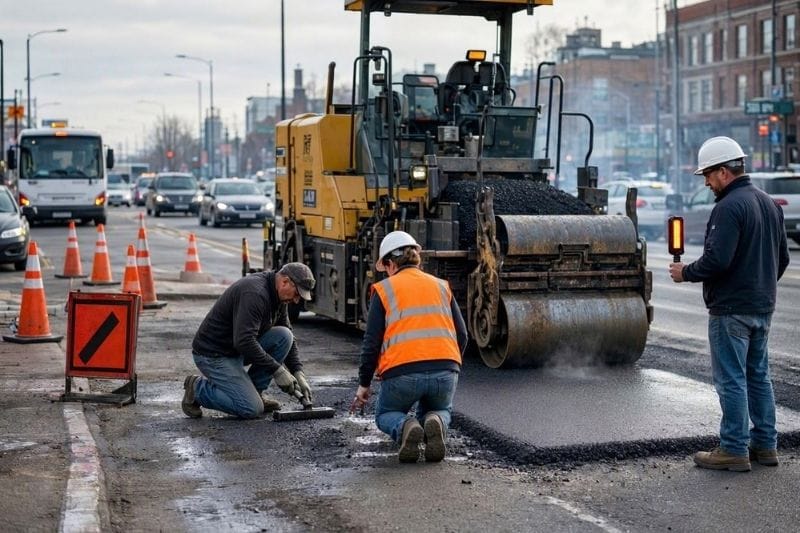
Road repairs move faster and perform better when crews solve the right problem at the right time, use the correct repair method, and hand off a clean, properly prepared surface for the next phase. According to the Federal Highway Administration pavement maintenance guidance, agencies that use timely maintenance and repair strategies can slow deterioration and avoid more expensive rehabilitation later.
For contractors, municipalities, and developers, the quickest way to improve repair results is to focus on five essentials first:
That sounds simple, but in practice, speed comes from coordination. A road repair is only as efficient as the prep work behind it. Native Construction stands out here because it combines asphalt milling, milling clean up services, and advanced grade control capabilities. That single source approach reduces handoff delays, lowers rework risk, and helps crews keep projects on schedule.
The fastest road repair is usually the one that prevents a bigger failure. The FHWA notes that preventive maintenance is a proven, cost effective way to extend pavement service life when the right treatment is applied at the right time. The agency also explains that preventive maintenance costs less than rehabilitation and helps preserve pavement condition before failure becomes widespread.
In real field terms, that means:
When teams wait too long, repairs become slower, broader, and more expensive. The FAA pavement maintenance guidance illustrates this clearly, noting that as pavement condition drops from fair to failed, rehabilitation costs can rise from one dollar to four or five dollars.
Most premature pavement failures trace back to one issue: water.
Maintaining roadway drainage is critical for both safety and roadway life because it helps prevent erosion, prevents saturation of the subbase, and protects roadway structures. Drainage guidance also notes that ponded water can reduce braking ability, contribute to hydroplaning, and accelerate pavement deterioration.
That’s why effective road repair is never just about filling a defect. Crews also need to ask:
If the answer is yes, the repair needs more than a surface treatment. It may need milling, grade correction, edge cleanup, or drainage attention before new asphalt goes down.
Not every damaged road needs the same treatment. Faster repairs come from diagnosing the distress correctly.
For early stage cracking, sealing or filling is often the most efficient option. The FHWA manual on sealing and filling cracks in asphalt surfaced pavements was developed to guide maintenance teams in selecting materials and procedures for crack treatment projects. The FHWA also provides a pavement preservation checklist series that supports systematic crack treatment best practices.
Best use case:
Potholes require quick action for both safety and pavement preservation. The FHWA manual on pothole repair describes pothole patching as a set of good practices based on research into repair materials and procedures.
Best use case:
When the surface is rutted, uneven, oxidized, or too damaged for isolated patching, milling becomes the smarter move. Milling removes distressed asphalt at a controlled depth and creates a uniform surface ready for overlay. Native Construction’s asphalt milling service emphasizes precise depth control, reusable millings, and readiness for projects ranging from highways to parking lots and airport pavement work.
Best use case:
Road repair projects often lose more time in preparation and cleanup than in the actual repair pass. That’s where Native Construction offers a clear operational advantage.
Its crews don’t just cut the surface. They also provide milling clean up services using brooms, sweepers, skid steers, and water trucks so paving operations can begin immediately after milling. On the company’s service pages, Native also highlights FDOT project experience, in house resources, and immediate post milling deployment that helps keep Florida jobs moving.
That matters because a clean milled surface supports:
In other words, fast repairs are not just about cutting or patching quickly. They are about eliminating downtime between steps.
On larger roadway, airport, and municipal projects, speed without grade control can create costly rework. Native Construction addresses this with UTS guided milling technology. Trimble UTS based systems adjust milling depths and slopes in real time and can achieve grade within millimeters, reducing finishing work and limiting errors across uneven terrain.
That level of precision is especially valuable when repairs involve:
For owners and prime contractors, that can mean fewer callbacks, smoother paving, and less time spent correcting the surface after milling.
Fast repairs still have to be safe repairs. The Manual on Uniform Traffic Control Devices is the national FHWA standard for traffic control devices. Their work zone guidance notes that temporary traffic control is necessary to guide road users safely and efficiently through work areas.
A strong repair plan should include:
This is another area where organized cleanup and coordinated crews make a difference. Safer sites tend to be more efficient sites because confusion, congestion, and stop start delays are reduced.
If your goal is faster, more durable results, use this sequence:
Look for cracking, rutting, potholes, drainage issues, and edge failures before they spread. The FAA recommends regular inspections and recordkeeping as part of an effective pavement maintenance program.
Clear drainage, seal entry points, and correct grade problems. Water left in place will keep undermining repairs.
Use crack treatment for early surface defects, pothole patching for localized failures, and milling when the surface needs precise removal and reset.
Milling is not just removal. It is surface preparation. The better the cut, the smoother and more efficient the paving phase becomes. Native Construction’s asphalt milling capabilities and full service offerings are built around that principle.
A ready to pave surface keeps the project moving and reduces idle time. Native Construction’s milling clean up teams are designed for exactly that kind of fast transition.
Many providers can handle a piece of the repair process. Native Construction is built to support the full preparation phase with more control and accountability.
What sets the company apart:
For owners and contractors, that combination can simplify scheduling, reduce coordination headaches, and improve final surface quality.
Road repairs become easier when teams stop treating them like isolated fixes. The fastest, most effective results come from early action, correct treatment selection, precise milling, strong drainage awareness, and immediate cleanup. When those steps are connected, projects move faster and pavement performance improves. That’s the value Native Construction brings to the job: technical precision, reliable execution, and a surface that’s truly ready for what comes next.