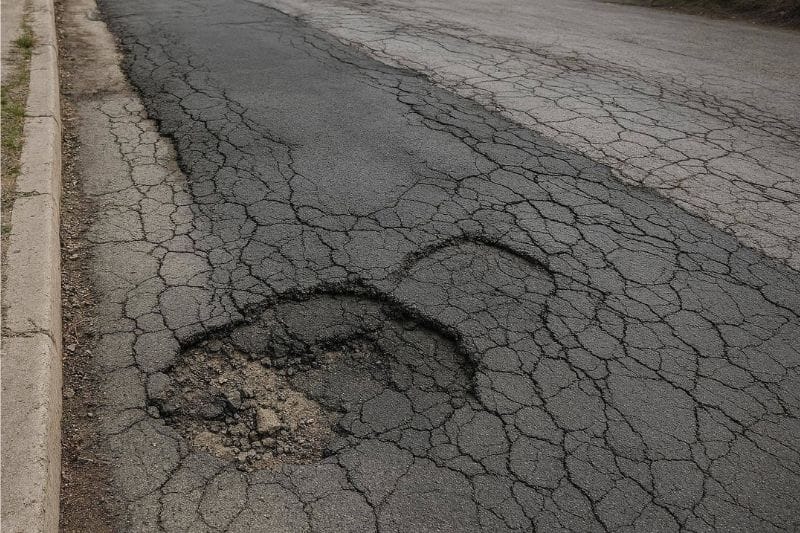
Fresh asphalt should look clean, feel smooth, drain properly, and hold up under traffic. If it starts cracking, raveling, rutting, or ponding water soon after installation, that is a warning sign that something went wrong during paving, compaction, grading, or surface preparation.
According to the Federal Highway Administration, common asphalt surface failures include bleeding, rutting, raveling, potholes, and several forms of cracking. The National Asphalt Pavement Association also notes that asphalt must be placed at the right temperature and compacted to the proper density to keep water out and reduce early failure.
If you want the fast version, these are the biggest red flags to watch for right away:
These problems do not always mean the entire pavement must be replaced. But they do mean the work deserves a closer look, especially if the surface is new.
A properly installed asphalt surface should have a consistent appearance, good drainage, solid edges, and smooth transitions at joints and tie ins. It should also be built over a stable foundation. The Federal Highway Administration explains that in place density is critical to long term durability because low density areas are more vulnerable to water intrusion, raveling, and cracking.
That matters because many visible asphalt problems start below the surface. A pavement can look acceptable on day one and still fail early if the base is weak, the mix cools too fast, or the mat is not compacted evenly.
Puddles are one of the easiest ways to spot a paving problem. If water remains on the surface after a storm instead of draining away, the pavement may have poor slope, low spots, or grading errors.
Standing water can reduce braking ability and contribute to pavement deterioration. Surface drainage is also essential because water infiltration can damage the pavement structure and the bond between asphalt binder and aggregate.
What to watch for:
New asphalt should not feel lumpy or uneven. Waves, ripples, bumps, and sags can point to paving issues such as poor base preparation, improper screed control, uneven material delivery, or poor compaction.
Surface distortions and rutting are major asphalt distress types. In practical terms, if a fresh lot or roadway already feels rough, the finished grade may be off or the mat may not have been laid consistently.
This is where precision makes a real difference. Native Construction stands out by using asphalt milling and advanced grade control to prepare a more accurate surface before paving begins. On projects that require tight tolerances, the company also uses UTS guided milling through its full service capabilities, which helps crews hit grade within millimeters and reduce avoidable rework.
If you notice small stones coming loose from the surface, that is not a cosmetic issue. It is often the start of raveling, which means the asphalt mix is losing aggregate from the top down.
The Federal Highway Administration describes raveling as a progression from loss of fines to loss of coarse aggregate and eventually a rough, pitted surface. Low density, poor compaction, mix problems, or early traffic on a weak surface can all contribute.
This sign matters because raveling usually gets worse, not better. Once the surface opens up, water can get in and speed up cracking and pothole formation.
Ruts are visible depressions where vehicles travel most often. They can indicate weak support below the asphalt, an unstable mix, insufficient thickness, or poor compaction.
Rutting is a deformation distress that shows up as channels in the wheel path. Even shallow rutting on newer pavement deserves attention because it suggests the structure is moving when it should be holding its shape.
In commercial lots, municipal roads, and high traffic areas, early rutting often points to an installation or design issue rather than normal aging.
All asphalt will eventually crack with age and traffic. What should concern you is cracking that appears unusually early or in patterns that suggest structural weakness.
Some cracks reflect aging over time. Others can signal that the pavement was too thin, the base was not stable, or the compaction was poor.
Pay attention to:
Joints are often the first place a weak asphalt job starts to fail. If the seam between passes is separating, cracking, or raveling, the joint may not have been built or compacted properly.
A transportation research report explains that joint quality can be evaluated through density, permeability, and infiltration because poorly constructed joints allow water into the pavement system. Another research summary on joint performance notes that lower density leads to higher permeability, moisture damage, and reduced pavement life.
In other words, a seam that opens early is more than a visual flaw. It is a durability problem.
The edges of the pavement should stay firm under normal use. If they chip, break, or unravel easily, the asphalt may lack proper support at the edge or may not have been compacted adequately.
Edge failure is common when paving ends without enough lateral support, when the base near the edge is weak, or when drainage washes material away. Once edges start breaking down, the damage tends to move inward.
Color alone does not prove failure, but a patchy, streaked, or visibly coarse surface can indicate segregation. That means the mix was not distributed uniformly, either by temperature or aggregate content.
According to Pavement Interactive, segregation and temperature differentials are construction related problems that can lead to early pavement failure. The Asphalt Institute also recognizes both aggregate and thermal segregation as issues that affect asphalt pavement performance.
A segregated mat often has weak spots. Those weak spots may begin to ravel or crack long before the rest of the pavement.
Most premature failures can be traced back to a few root causes:
That last point is often overlooked. Proper surface preparation matters. Native Construction helps reduce this risk by providing milling clean up services immediately after the cut, using sweepers, skid steers, brooms, and water trucks to prepare the surface for paving without unnecessary delay.
Many paving problems begin before the new asphalt is ever placed. Native Construction focuses on the part of the job that determines whether resurfacing starts on solid ground.
What makes the company different:
That combination supports what owners, contractors, and municipalities actually need: fewer surprises, less rework, and a better finished pavement.
If the pavement is already showing warning signs, act early.
Small problems can become major failures if water keeps entering the pavement structure.
A good asphalt job should do more than look fresh for a few weeks. It should drain well, ride smoothly, resist early distress, and give the next phase of the project a solid foundation. If you see ponding water, loose aggregate, seam failure, rutting, or early cracking, those are signs the pavement may not have been done right.
For projects where precision matters, Native Construction brings the kind of preparation that helps paving crews succeed from the start. Accurate milling, tight grade control, and fast cleanup are not extras. They are part of building pavement that lasts.