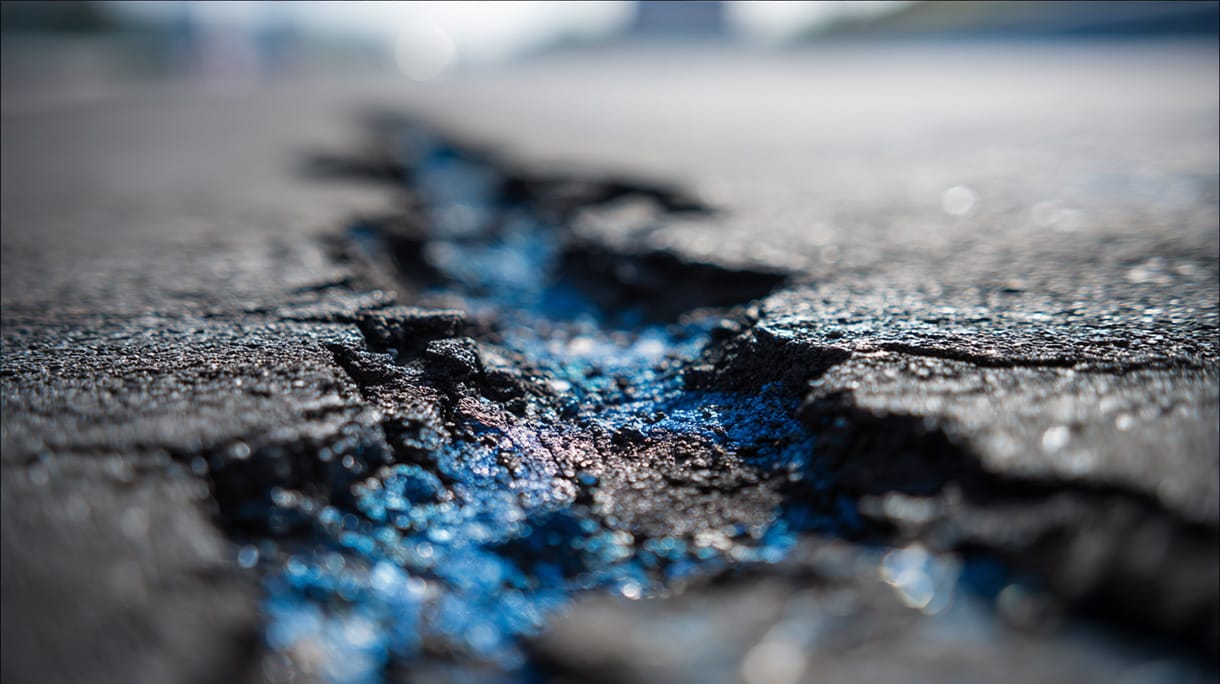
Determining the proper thickness for asphalt driveways and parking lots helps ensure safety, reduce maintenance costs and extend pavement life.
The ideal asphalt thickness depends on several factors, including traffic volume, soil conditions and climate. Two to three inches of asphalt is sufficient for most driveways, while three to four inches is required for commercial surfaces to handle heavier loads and more frequent use.
Asphalt pavement construction requires careful consideration of factors such as a compacted subgrade, an aggregate base and asphalt concrete. Asphalt pavement that is too thin won’t distribute weight properly and can develop cracks and other damage.
This article explains why working with an experienced contractor ensures the asphalt has the proper thickness, is installed safely, and is built to last for years to come.
Traffic volume is a key factor in determining asphalt thickness; higher traffic volumes require thicker asphalt. The extra layers, combined with a substantial aggregate base, provide more structural support for heavier loads and frequent use.
Three to four inches of compacted asphalt is generally sufficient for new residential driveways used by standard passenger cars. For overlays, a thickness of two inches is recommended.
Commercial parking lots and driveways typically require three to four inches of asphalt to handle heavier vehicles and traffic. Heavy-duty areas such as loading docks may require even thicker asphalt, up to six inches or more.
Soil conditions, such as clay or sand, can also affect the required thickness of the asphalt pavement. Weak soil will need thicker asphalt to help prevent cracking and other issues. Stabilized soil can support a thinner asphalt layer.
Climate and weather conditions, including freeze-thaw cycles, can affect asphalt durability. Lower temperatures reduce asphalt’s flexibility and can cause brittleness and cracking, while high temperatures can soften asphalt, leading to rutting and deformation.
Florida is known for its extreme heat, frequent storms and heavy rainfall. An experienced contractor monitors the weather and plans accordingly for severe conditions. Heavy rain increases the importance of proper drainage and base preparation, as water infiltration—rather than rainfall alone—leads to potholes and pavement failure. High heat demands careful planning to lay the asphalt at the right temperatures to prevent warping, rutting and premature softening.
Additionally, asphalt mix types such as hot mix asphalt (HMA) and warm-mix asphalt are both suitable for full-depth paving. In contrast, cold mix asphalt is typically used for temporary repairs rather than structural pavement layers.
Asphalt pavement construction consists of multiple layers, including a compacted subgrade, aggregate base and asphalt concrete. The thickness of each layer helps ensure pavement stability and durability.
The subgrade refers to the natural soil foundation. Weaker soil requires more layers to build a stronger foundation, whereas stronger soil does not. The base course is the layer of aggregate, such as crushed stone or gravel. This provides drainage and foundational support for the asphalt pavement.
The base course is made of densely compacted aggregate and serves as the main structural support for load distribution. The binder course, the thicker asphalt layer, bonds the base to the structure and provides additional structural support.
The top layer is the surface course. This provides the smooth, durable finish typical of asphalt driveways and parking lots and serves as the surface on which traffic travels.
Asphalt pavement construction requires careful planning and execution to ensure top performance and long-lasting durability. Using materials such as crushed stone and gravel can improve drainage and reduce the risk of cracks. Proper drainage and water management are crucial to prevent water from seeping into the pavement and causing damage.
Each asphalt layer must be installed properly to prevent water from seeping in and causing cracks, potholes and other problems.
The soil should be of good quality and well-drained from the start. The compacted aggregate allows water to quickly move to the subgrade, preventing pooling and related issues. The surface layer must also be slightly sloped to direct water toward drains, ensuring it flows away from the pavement.
Calculating the required asphalt quantity involves determining the pavement volume in cubic yards or cubic meters, based on the project’s surface area and specified thickness. Precise measurements of both dimensions are essential to ensure accurate material estimation.
The standard density of HMA is typically around 145 lb/ft³ (2322 kg/m³), though this value may vary slightly depending on the asphalt mix design and aggregate type.
To determine the total asphalt weight required, first convert the project area and thickness to volume. For example, multiply the surface area by the pavement thickness to get the volume. Then, multiply this volume by the standard density to determine the total weight.
A general rule of thumb is that one cubic yard of compacted asphalt weighs about 2.025 tons.
Understanding how to calculate the required asphalt quantity is essential to avoid waste and ensure sufficient material for the project. It is best to add more asphalt to the estimate to account for surface irregularities, base stability, compaction loss and material handling, which can affect the final quantity needed.
Working with a professional contractor also helps ensure the correct amount of asphalt is accurately measured and efficiently used, reducing waste, controlling costs and preventing delays caused by material shortages.
Regular maintenance, such as seal coating, prompt repair of potholes and crack filling, can help extend the lifespan of asphalt pavement. Understanding the factors that influence asphalt thickness, like traffic volume and climate conditions, can help identify potential issues before they become major problems. Regular inspections and assessments also help pinpoint areas that need attention and prevent premature wear and tear.
Local specialists like Native Construction Group help ensure proper asphalt thickness, improve safety, reduce maintenance costs and extend the pavement’s lifespan.
Reach out today to begin your next pavement project. Working with seasoned professionals ensures the pavement is built correctly the first time and built to last for years to come.