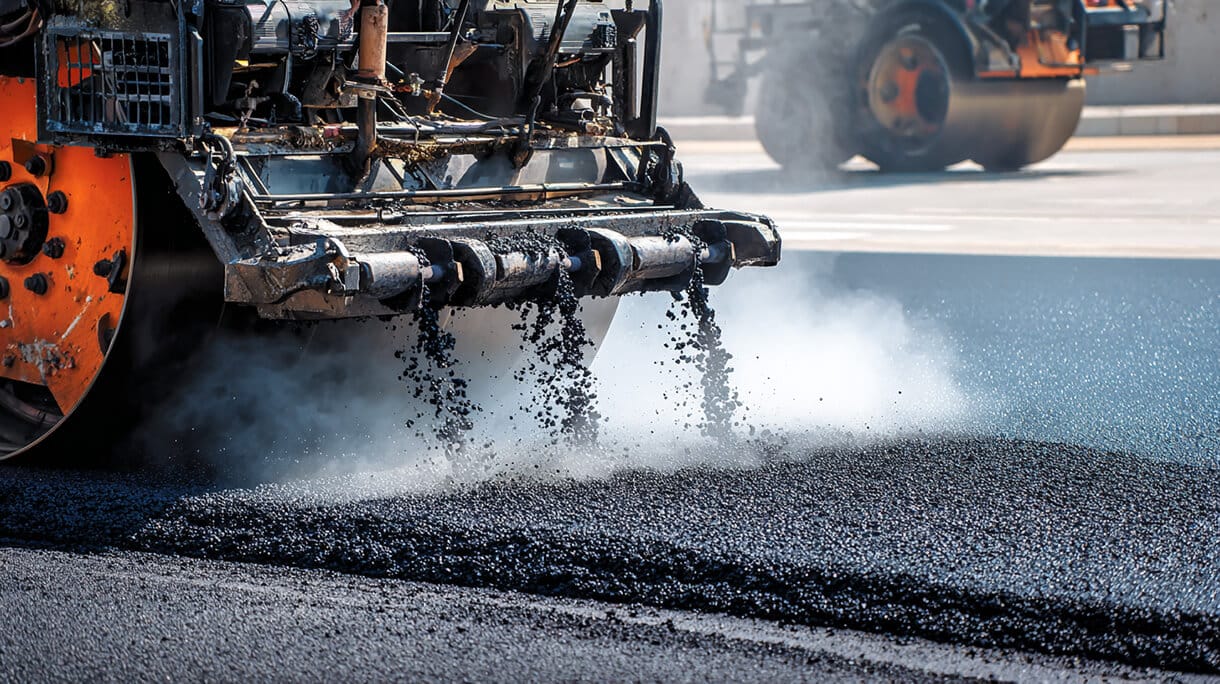
Asphalt pavement is a widely used option for driveways, parking lots and roads because of its durability and low maintenance needs.
When asphalt is freshly poured, it typically ranges from 275°F to 300°F, which keeps it workable for proper placement and compaction.
Effective temperature control is crucial when working with hot-mix asphalt, which is produced at very high temperatures. Handling asphalt during paving requires trained professionals equipped with proper safety gear. As paving progresses, the asphalt cools and hardens, so crews need to work efficiently to shape it before it becomes too stiff.
While fresh standard hot-mix asphalt usually ranges from 275°F to 300°F, it’s important to consider several other factors.
Fresh asphalt should be poured between 275°F and 300°F. Within this range, the mix stays flexible enough for proper spreading and compaction.
When asphalt leaves the plant, it is about 275°F to 325°F, most commonly in the 290°F to 305°F range. When it is laid down to form pavement, it is between 275°F to 300°F.
The minimum temperature needed for proper compaction is about 175°F. This squeezes out air pockets, resulting in a strong, long-lasting surface.
If the asphalt is too cold, it can harden too quickly, creating a rough surface. Excessively high temperatures can damage the asphalt binder, reducing pavement durability.
It is also important to consider the air temperature, which should generally fall between 40°F and 85°F for best results. If it is too cold, the asphalt can cool too quickly, leading to cracking.
For a lift thickness of three inches or more, the ambient temperature for hot-mix asphalt should be 40°F.
For fewer than three lifts, 50°F is suitable.
However, warm mix asphalt can be laid at even lower temperatures, around 35°F.
Weather conditions such as wind speed, humidity and ground temperature all affect cooling.
Wind increases air movement, reducing asphalt’s temperature and causing it to set sooner, while high humidity can slow down cooling.
The type of asphalt mix, including the aggregate and asphalt cement, can also affect the required temperature. For example, hot-mix asphalt should be heated to about 300°F. Warm mix asphalt, which contains additives to lower the required paving temperature, needs to be heated much less, from 215°F to 275°F.
Asphalt surfaces are often made from hot-mix asphalt, the most common choice because it is cost-effective, easy to maintain and has a long lifespan.
The asphalt paving process involves site preparation, laying the asphalt mix and compacting.
At paving sites, the existing surface is removed, graded for drainage, and a sub-base is laid for support and durability. Specialized equipment, such as hot-mix plants and pavers, operated by skilled teams, ensures timely, safe completion.
Connections between the pavement and structures are smoothed, followed by installing a binder and aggregate base for strength, then the wear course for traffic. Finally, compaction creates a smooth surface.
Paving can occur anytime, ideally early morning or late afternoon when it’s cooler.
Aggregate, a mix of small materials and binder from crude oil, acts as glue, providing thickness and supporting heavy loads.
Asphalt cools quickly, especially in cold weather, making proper compaction crucial.
Effective compaction requires an ambient and ground temperature of at least 40°F. If temperatures are lower, cooling proceeds more quickly, narrowing the window for effective hardening.
Rain can make asphalt slippery and uneven. It weakens the base layer and causes visible damage, leading to irregular surfaces. Water seeps into the surface and gradually dissolves the material, causing moisture damage.
Wind and humidity also affect the asphalt paving process. Therefore, it is vital to schedule paving thoughtfully and carefully, which can reduce the likelihood of weather-related problems, especially in climates like Central Florida, where summer brings frequent rainstorms and high temperatures.
Ground temperature impacts both the cooling process of freshly poured asphalt, including how quickly the material cools, and the durability of the pavement.
When the ground gets very cold, asphalt shrinks and contracts. This, combined with vehicle traffic, gradually causes cracks and potholes. Conversely, higher ground temperatures, such as in Florida summers, can accelerate deterioration when combined with heavy loads.
Ground temperature also influences asphalt cement and aggregate, especially when temperatures drop, making on-site temperature monitoring essential for quality control.
Ambient temperature affects how long crews have to compact the asphalt. The optimal range is typically 60°F to 85°F, depending on the mix type.
Too high an ambient temperature can make the asphalt too soft, while too low a temperature reduces compaction effectiveness and can create weak spots and air voids that can later develop into potholes and other types of damage.
Working with hot asphalt requires strict safety protocols to prevent severe burns and ensure worker safety.
Professionals are equipped with heat-resistant gloves, high-visibility vests, respirators, safety boots and the proper protective equipment (PPE) to prevent heat exhaustion and other concerns.
Specialized tools like thermometers and heat guns can help track the temperature of hot asphalt to ensure it spreads evenly. There are also shovels, rakes, tampers and screeds for spreading, leveling and compacting. Large machinery like rollers, sweepers, milling machines, asphalt pavers and dump trucks are also likely to be on site.
A professional team ensures all equipment is inspected before use, verifying that everything functions properly, that repairs are completed, that all brakes work, and that horns are operational. They also take necessary safety precautions when working on asphalt paving in busy traffic conditions.
If you’re thinking about paving projects, teaming up with skilled professionals can boost your chances of success. Construction experts can make sure the hot asphalt is poured and compacted at the right temperatures for long-lasting results.
Safety precautions, effective communication and teamwork contribute to a successful outcome and a smooth and long-lasting surface.If you’re planning a new asphalt paving project, Native Construction Group is here to support you every step of the way, making sure your project goes smoothly, lasts long, stays pothole-free and finishes on time.