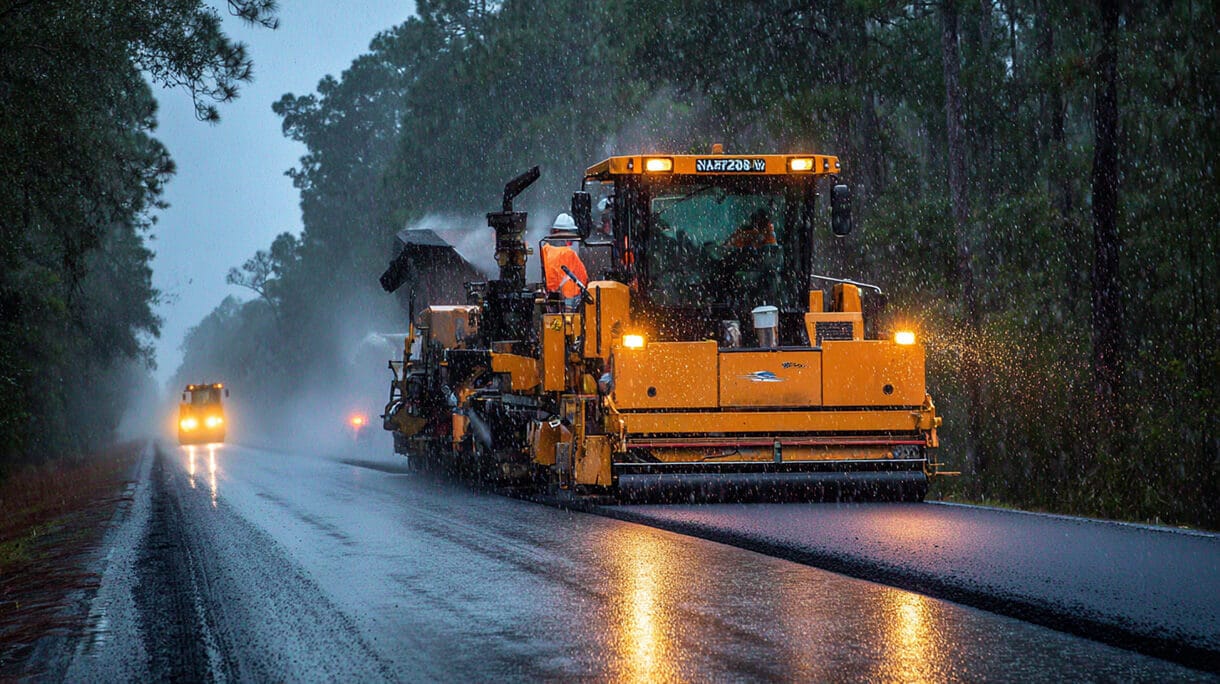
Installing asphalt pavement requires thorough planning and preparation to achieve a durable, long-lasting surface, with weather conditions playing a crucial role in the project’s success.
When it comes to asphalt paving preparation, timing matters in rainy weather, as moisture can prevent proper compaction, weaken the sub-base, and cause premature cracking, potholes, and a weaker final product.
Experienced contractors are adept at adjusting paving schedules around weather windows to avoid rain-related issues. They also have the experience, proper tools and safety equipment to ensure a successful paving project.
Before starting, the drainage and soil type are evaluated to determine the best method for installing the pavement. Recognizing weak spots helps ensure a stable surface and prevents expensive repairs.
The asphalt driveway installation process involves removing the old asphalt, preparing the sub-base, and installing new asphalt layers.
First, the existing surface is carefully removed, graded to ensure proper drainage, and a strong sub-base is installed for stability and durability. The sub-base provides a stable foundation for the asphalt layers.
The asphalt surface is prepared by first applying a binder layer, then adding the final surface course.
Next, connections between the pavement and structures are carefully smoothed, with edge restraints and butt joints thoughtfully installed to create a clean, safe surface.
Paving should be postponed when the ground is wet, as moisture hinders proper compaction and can weaken the pavement’s long-term durability. Even slightly damp soil can trap moisture, creating weak spots beneath the new pavement that could eventually turn into cracks, potholes and other concerns.
Crews can use moisture meters or visual inspections to verify that the surface is fully dry before paving.
Asphalt paving contractors follow best practices to ensure a successful paving project and help prevent costly repairs.
One of those rules is to avoid paving when rain is forecast within 24 hours to maintain bond strength and proper compaction.
After paving, follow-up maintenance such as sweeping, crack sealing and sealcoating is essential to prevent premature deterioration and ensure long-term success.
Well-maintained, properly installed asphalt pavement can withstand harsh weather conditions and serve as a durable surface for many years. Post-installation care is essential to preserving the pavement’s lifespan.
Local specialists like Native Construction Group also monitor weather patterns to ensure asphalt is carefully managed and installed correctly, resulting in a long-lasting, durable and visually appealing surface for every need.
Reach out today to begin your next pavement project and make sure it’s built to last.